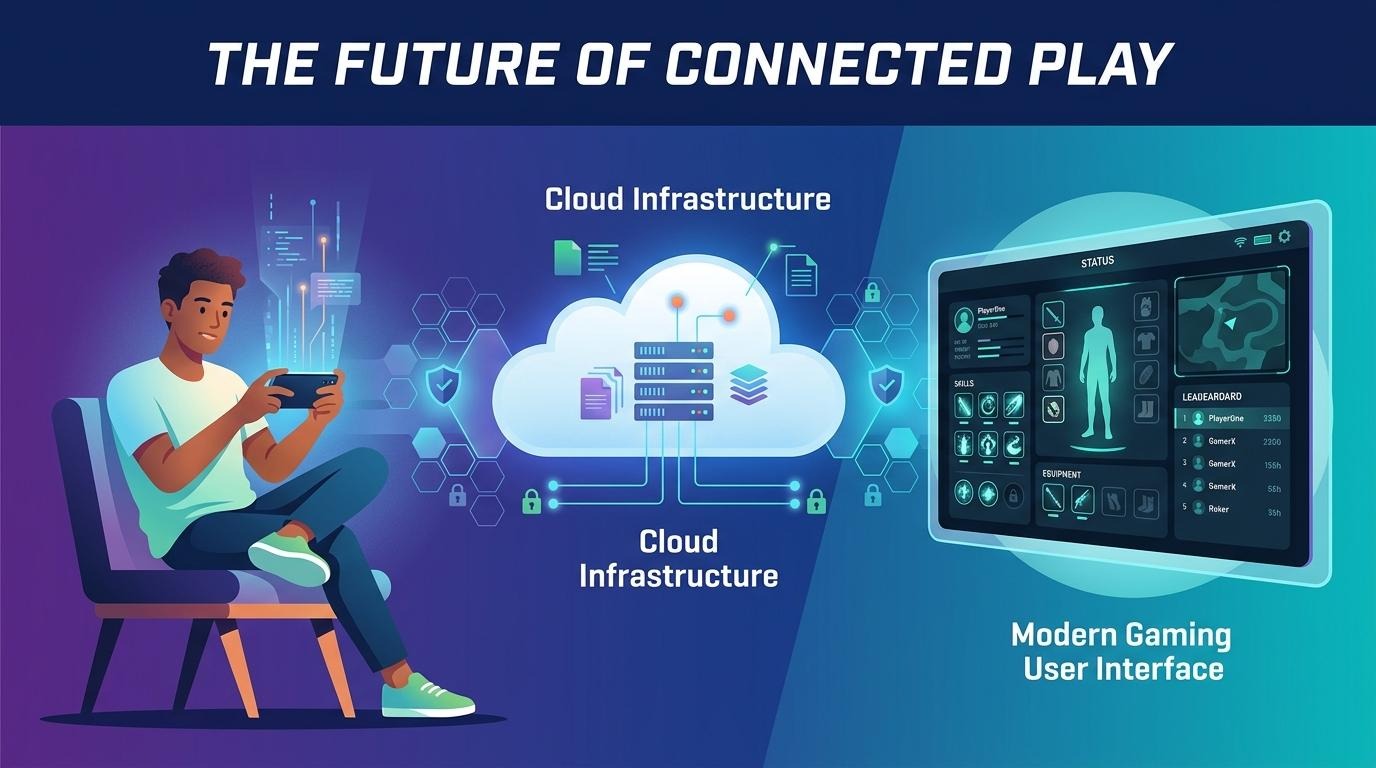
The digital entertainment landscape has undergone a silent infrastructural overhaul over the past decade. Where early web-based gaming platforms relied on simple client-server requests and monolithic backend databases, contemporary interactive environments operate on highly distributed cloud architectures. Today, millions of concurrent users expect instantaneous state synchronization, continuous live video streaming, and seamless cross-device account persistence. Achieving this level of reliability requires a complex synthesis of edge computing, specialized streaming protocols, dynamic load balancing, and robust cryptographic security. As consumer expectations shift toward mobile-first experiences, the technical demands placed on software engineering teams behind these platforms have escalated significantly.
Reducing Latency: The Backbone of Interactive Media
In any real-time digital interactive system, high latency is the ultimate point of failure. Whether dealing with competitive esports, live dealer environments, or interactive broadcasting, microsecond delays disrupt synchronization between the user interface and the backend processing engines. Traditionally, content delivery networks (CDNs) were optimized primarily for static asset delivery—caching images, scripts, and pre-recorded media close to the end user. However, modern dynamic applications require bi-directional, real-time data exchange.
To achieve sub-second latency, platform engineers increasingly deploy hybrid networking models combining WebRTC (Web Real-Time Communication) with custom WebSocket protocols. WebRTC allows peer-to-edge video and data streaming without requiring heavy browser plugins, reducing glass-to-glass streaming latency to under 200 milliseconds. Meanwhile, persistent WebSockets maintain an open, full-duplex TCP connection, enabling the server to push real-time state changes—such as balance updates, live event odds, or multiplayer coordinates—directly to the client instantly. By distributing these connections across localized edge servers operating near major internet exchange points (IXPs), platforms minimize physical packet travel distances and bypass common public network congestion bottlenecks.
Session Security and Access Resilience in High-Traffic Environments
Ensuring high availability for millions of active users requires robust account protection and dynamic access management. Distributed denial-of-service (DDoS) attacks, regional network throttling, and routing failures pose constant operational risks to digital entertainment software. Modern architectures solve these vulnerabilities through multi-layered identity management frameworks and dynamic domain orchestration.
User authentication standardly leverages OAuth 2.0 and JSON Web Tokens (JWT) paired with hardware-backed encryption on mobile devices. When a user completes an M88 login session on a smartphone, the system exchanges temporary, cryptographically signed session tokens rather than storing sensitive credentials locally. This minimizes the risk of credential interception on untrusted public Wi-Fi networks. Furthermore, maintaining continuous uptime requires resilient entry routing systems. When primary gateways experience localized ISP interference or server congestion, intelligent dynamic DNS routing silently redirects incoming requests to alternative, fully synchronized backup domains. This ensures that users accessing an M88 link encounter minimal disruption, maintaining unbroken access to platform services regardless of regional infrastructure fluctuations.
Cross-Platform Frameworks and Mobile Optimization
The transition from desktop browsers to mobile applications has reshaped front-end engineering priorities. Mobile devices operate under tight computational constraints, including restricted battery power, thermal throttling, and fluctuating mobile network coverage (ranging from high-speed 5G to intermittent 4G connections). Building separate native codebases for iOS (Swift) and Android (Kotlin) while keeping web platforms synchronized often creates architectural debt and feature parity delays.
To mitigate this, software engineers increasingly rely on high-performance cross-platform frameworks combined with native C++ rendering engines. These hybrid architectures compile down to native code, enabling smooth 60-frames-per-second UI animations while sharing core business logic across platforms. In regional markets where entry-level mobile hardware predominates, optimization strategies extend deep into memory management and asset compression. Platforms like M88 illustrate how modern digital media brands balance feature-rich, high-definition live video feeds with lightweight APK execution, ensuring that legacy mobile hardware can process real-time graphics and security handshakes without system crashes or high battery drain.
Optimizing the Cold-Start Experience on Mobile Devices
Beyond runtime stability, user retention relies heavily on immediate app launch performance. Modern mobile software minimizes cold-start delays by deferring non-critical telemetry and heavy media rendering until after primary authentication. By pre-caching essential user interfaces and utilizing asynchronous resource loading, interactive apps allow users to interact with critical dashboard features within milliseconds of opening the client application.
The Future of Cloud-Native Gaming Infrastructure
As digital entertainment technologies continue to converge, the underlying software stack will become even more distributed. Emerging innovations such as WebAssembly (Wasm) are bringing desktop-class processing power directly to mobile web browsers, eroding the operational divide between native mobile applications and web clients. At the same time, AI-assisted edge routing and zero-trust security frameworks will further safeguard platform infrastructure against sophisticated cyber threats while delivering personalized, low-latency experiences. Ultimately, the success of modern interactive platforms relies on the invisible work of system architects—building resilient, highly performant digital ecosystems capable of serving global audiences without friction or interruption.