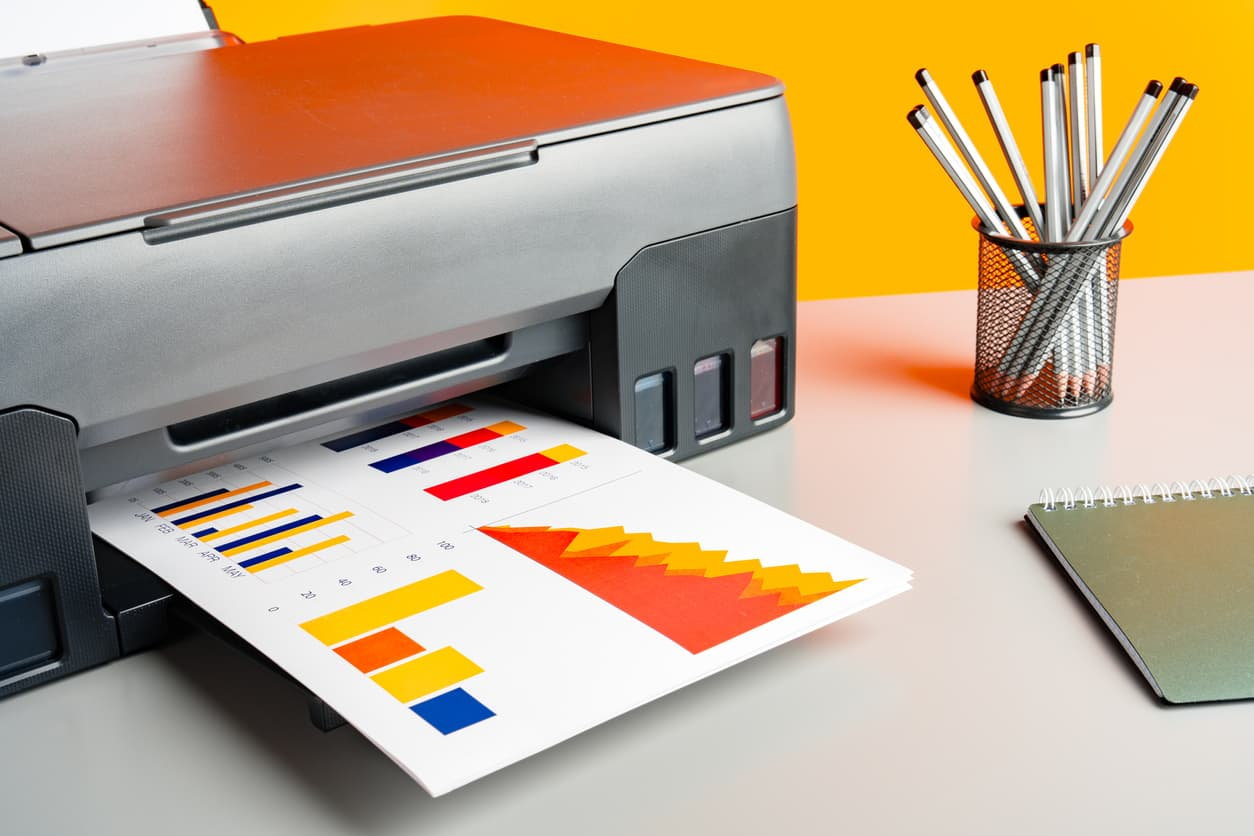
The previous chapter of the printing revolution was defined by speed, digital integration, and personalization. As we move further into the decade, the industry is shedding its identity as a mere reproduction tool. Today, printing is transforming into an advanced manufacturing medium capable of depositing functional materials, living cells, and conductive circuits directly onto surfaces.
We are no longer just printing images or objects—we are printing functionality.
Conductive Inks and Printed Electronics
One of the most exciting developments in modern printing is the integration of conductive materials into standard production lines. By using specialized inks infused with silver nanoparticles, carbon nanotubes, or graphene, manufacturers can print electronic circuits onto flexible substrates like paper, plastic, or fabric.
This technology bridges the gap between the physical and the digital in ways traditional screens never could:
- Smart Packaging: Milk cartons or pharmaceutical boxes can feature printed temperature sensors or freshness indicators that change color or signal a smartphone when the product spoils.
- Wearable Tech: Biomedical sensors can be directly printed onto breathable fabrics, creating comfortable health monitors that track heart rate, hydration, or glucose levels in real time.
- Interactive Paper: Educational books or board games can include touch-sensitive paper circuits that play audio or light up when a child touches a specific illustration.
By merging electronics with high-speed roll-to-roll printing processes, the cost of smart objects drops dramatically, opening the door for Internet of Things (IoT) integration on an unprecedented scale.
Bioprinting: Printing Living Tissue
Perhaps the most profound application of the technology is 3D bioprinting. Instead of using polymers or metals, bioprinters use “bio-inks”—hydrogels loaded with living human cells. Layer by layer, these machines construct complex cellular scaffolds designed to mimic natural human tissue.
While fully functional, 3D-printed organs for human transplantation are still undergoing rigorous clinical development, the immediate impacts are already reshaping medicine:
- Pharmaceutical Testing: Researchers can print miniature human liver or heart tissues to test drug efficacy and toxicity, drastically reducing the reliance on animal testing and accelerating drug discovery.
- Wound Healing: Experimental handheld bioprinters allow medical personnel to deposit skin cells directly onto burn wounds, accelerating regeneration and minimizing scarring.
In this context, printing stops being a mechanical process and becomes a biological catalyst, blurring the line between engineering and medicine.
Nanoprinting and Optics
At the opposite end of the scale from massive industrial signage is nanoprinting, which operates at the molecular level. Using advanced lithographic and high-resolution printing techniques, engineers can manipulate light and matter using nanostructures smaller than the wavelength of visible light.
This enables the creation of ultra-thin optical components, such as flat lenses for smartphones, advanced anti-reflective surfaces, and microscopic security holograms that are virtually impossible to counterfeit. Currency, luxury goods, and microchips all benefit from this invisible layer of precision printing.
The Circular Lifecycle and Zero-Waste Goals
As these advanced applications expand, the sustainability mandate shifts from merely using soy inks to achieving a closed-loop circular economy. The next generation of printing materials focuses on total biodegradability and recoverability.
Researchers are developing transient electronics—circuits and sensors printed on organic substrates that dissolve harmlessly in water or compost after their operational lifespan ends. This eliminates the looming e-waste crisis posed by disposable smart devices. Furthermore, advancements in chemical recycling allow printed plastics and multi-layer packaging to be cleanly separated and repurposed into raw feedstocks.
Redefining What is Possible
The trajectory of printing proves that old technologies do not necessarily die when disrupted—they evolve. What began as a wooden screw press stamping ink onto rag paper has expanded into an interdisciplinary science touching electronics, regenerative medicine, and molecular engineering.
The humble press has grown up. It no longer just records our history or displays our advertisements; it builds our electronics, heals our bodies, and helps engineer our sustainable future.